Tesamorelin research: the scan results
The visceral-fat result is the beginning. Liver measurements, tissue samples and a change in CT density make the rest of the record more interesting.
Tesamorelin benefits measured at 26 weeks
The 2007 randomized trial enrolled 412 adults with HIV and abdominal fat accumulation. Visceral fat changed by -15.2% with tesamorelin and +5.0% with placebo at 26 weeks. Triglycerides fell by 50 mg/dL with tesamorelin and rose by 9 mg/dL with placebo; IGF-1 increased 81.0% with tesamorelin.
I regard the visceral-fat measurement as the central result. Weight and fat beneath the skin changed little, so describing this as broad weight loss loses the anatomical specificity. The effect was measured around the organs in the population the trial recruited.
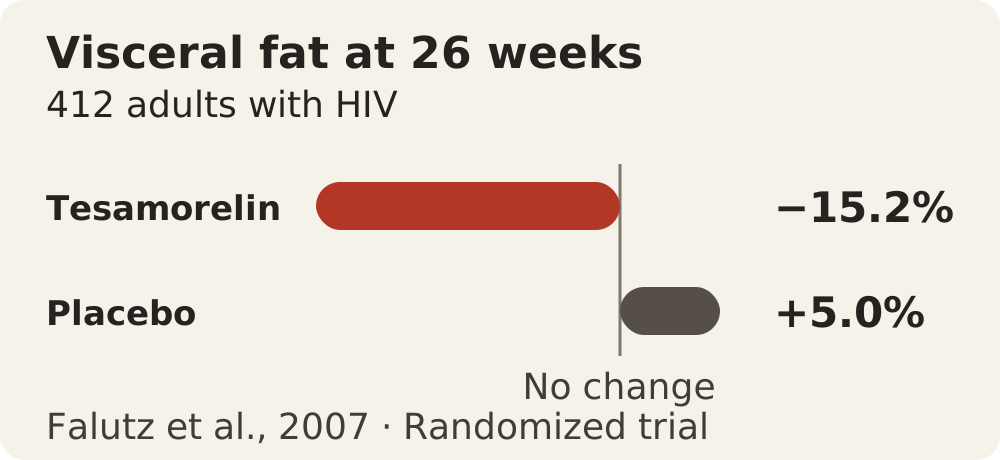
Tesamorelin before and after treatment
These tesamorelin before and after results came from scans. In the 52-week follow-up, visceral-fat reduction was sustained at 18% below baseline with continued treatment. Withdrawal was followed by fat reaccumulation, beginning within weeks.
The return makes me less impressed by descriptions of a lasting transformation. Continued treatment and withdrawal produced different trajectories. A photograph of somebody’s waist could not replace those observations, and none of these group results predicts an individual outcome.
Liver fat in 50 adults
The 6-month JAMA trial randomized 50 adults with HIV receiving antiretroviral treatment: 28 to tesamorelin and 22 to placebo. The visceral-fat treatment effect was -42 cm2. The net change in hepatic lipid-to-water percentage was -2.9%.
The units deserve a moment. The first figure concerns area on a scan; the second concerns a liver measurement. The -42 cm2 is the treatment effect comparing groups, rather than the tesamorelin group’s raw average change. The liver result intrigues me because it widens the question beyond the outline of an abdomen. This trial still concerned people with HIV.
Liver tissue after 12 months
A transcriptomic analysis of liver tissue examined which genes were more or less active after 12 months in people with HIV-associated fatty liver. Oxidative-phosphorylation gene sets, involved in cellular energy production, were upregulated. Inflammatory and tissue-remodelling pathways were downregulated.
I’d give this finding a place beside the scans, with its own limits intact. Gene activity offers a mechanistic clue. It does not demonstrate that every cell burned more fuel, establish a direct drug action on liver cells, or settle long-term clinical outcomes.
The 2026 meta-analysis of five randomized trials reported a pooled hepatic-fat-fraction change of -4.28% and reductions in visceral and trunk fat, alongside increased lean body mass. The review reported no serious adverse events. Its findings concern HIV-associated lipodystrophy; longer-term safety and broader indications remain separate questions.

CT fat density
The 2021 analysis of fat quality looked at CT density independently of changes in quantity. Over 26 weeks, visceral-fat density increased by 6.2 HU with tesamorelin versus 0.3 HU with placebo. Subcutaneous-fat density increased by 4.0 HU versus 0.3 HU. HU means Hounsfield units, the scale used for CT density.
The tissue’s character deserves attention alongside its size. The authors interpreted the density changes as improved fat quality, independently of how much fat changed. A rise on this scale can therefore accompany improvement. It is a different measurement from an increase in the amount of fat, and its clinical significance needs to be considered on its own terms.
Predicting response
A pooled analysis of the Phase 3 trials included 543 tesamorelin recipients and 263 placebo recipients. The odds of reducing visceral-fat area below 140 cm2 were 3.9-fold greater with tesamorelin, with a 95% confidence interval of 2.03–7.44. Baseline metabolic syndrome, triglycerides above 1.7 mmol/L and white race were associated with response. No predictors were identified at 3 months.
Those are associations from a pooled analysis, with considerable uncertainty around the odds estimate. I wouldn’t turn the list into a way to select an individual responder. A later post hoc analysis of dorsocervical fat found comparable abdominal-fat and waist changes in people with and without fat accumulation behind the neck.
Fat loss outside the HIV population
The small healthy-men study showed a hormonal response over 2 weeks. It did not establish long-term fat loss in the general population. The strongest abdominal-fat trials and the liver findings above concern people with HIV.
I can see a biological reason to investigate wider uses. That opinion stops well short of an efficacy finding. General or cosmetic fat loss and fatty liver disease outside the approved HIV indication remain off-label uses. The approval section gives the scope, and the safety page covers the complications that a scan cannot answer.